Care as Culture, Culture as Resistance: The Black Family Child Care Educator Well‐Being Project

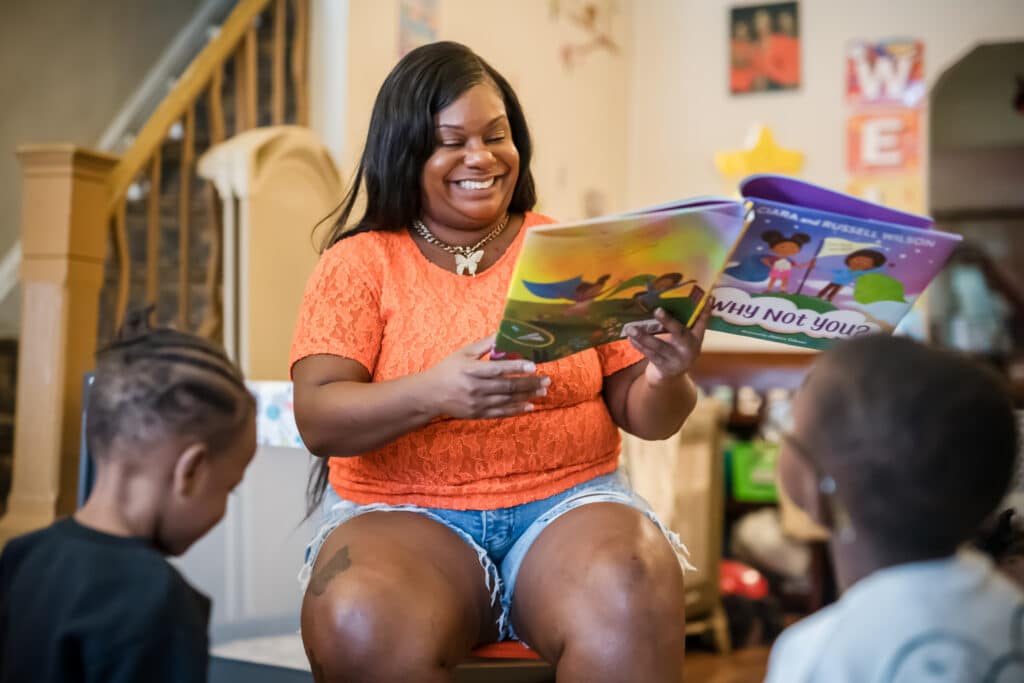
Woman reading a colorful book to two young children in a cozy, home-like setting.

Black Family Child Care Educators are foundational to early childhood systems, serving as cultural bearers, pedagogical leaders, and trusted community anchors for children and families. Yet despite their indispensable contributions, Black FCC educators continue to navigate systemic inequities—rooted in racialized and gendered histories of carework—that undermine their well‐being and threaten the long‐term sustainability of home‐based care.

This white paper, Care as Culture, Culture as Resistance: The Black Family Child Care Educator Well‐Being Project, emerges from a study rooted in the lived experiences of Black family child care educators, who shared their stories through surveys, community talks, and peer exchanges. The paper was made possible through the support of the Boston University Center for Early Childhood Well-Being and Development Fellowship, the UNC Chapel Hill Equity Coalition’s RISER (Researchers Investigating Sociocultural Equity & Race) Seed Grant, and partners at Home Grown.
Women’s contributions and experiences are not well represented in the record books, but it is just as rich and worth celebrating. Ours is a tale of community, resilience, and connection to one another, and it is inextricably linked with care work. 
During Women’s History Month, we celebrate the contributions that women have made to every corner of our society and honor their achievements. Among these leaders are the more than 5 million women who form the backbone of home-based child care (HBCC).
For generations, Black home-based child care providers have built systems of care rooted in community, trust, and resilience, often stepping in where formal systems fell short. Of the over 5 million home-based child care providers, including Family Child Care providers and paid and unpaid Family Friend and Neighbor caregivers, roughly a quarter in each subgroup identify as Black Non-Hispanic