United Way for Greater Austin

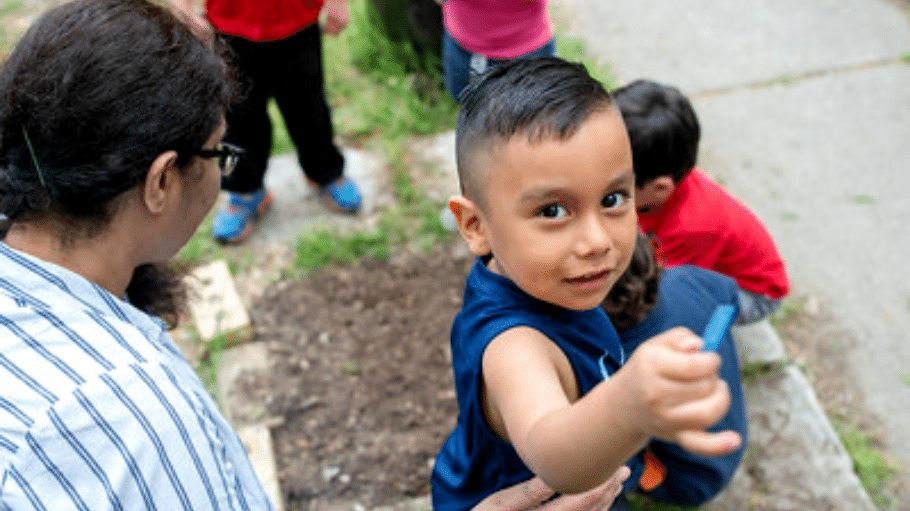
Young boy outdoors holds up a crayon, looking at the camera, with other children and an adult nearby.

COVID-19 Impact

Many home-based providers in Austin, Texas are ineligible for other public supports and funding streams. This includes providers likely to be immigrants without documentation serving children of essential workers who are also undocumented and are unable to participate in the child care subsidy system supported by the State.

According to a recent survey in Austin/Travis County, 44% of family child care homes were closed. The biggest concerns among providers were the ability to pay staff and whether families will come back after the pandemic is over.

Emergency Fund

To address these income gaps, the Success By 6 Family Child Care Emergency Fund is supporting providers to sustain the supply of home-based child care in Austin/Travis County. The fund will award 54 providers grants of up to $1,500 with the goal to address both immediate needs and long-term sustainability and quality of the in-home child care ecosystem.

Home Grown is a national collaborative of funders committed to improving the quality of and access to home-based child care with a mission to increase access to and the quality of home-based child care. 

Women’s contributions and experiences are not well represented in the record books, but it is just as rich and worth celebrating. Ours is a tale of community, resilience, and connection to one another, and it is inextricably linked with care work. 
During Women’s History Month, we celebrate the contributions that women have made to every corner of our society and honor their achievements. Among these leaders are the more than 5 million women who form the backbone of home-based child care (HBCC).
For generations, Black home-based child care providers have built systems of care rooted in community, trust, and resilience, often stepping in where formal systems fell short. Of the over 5 million home-based child care providers, including Family Child Care providers and paid and unpaid Family Friend and Neighbor caregivers, roughly a quarter in each subgroup identify as Black Non-Hispanic