Brief: Revised CACFP Rates Don’t Make a Dent

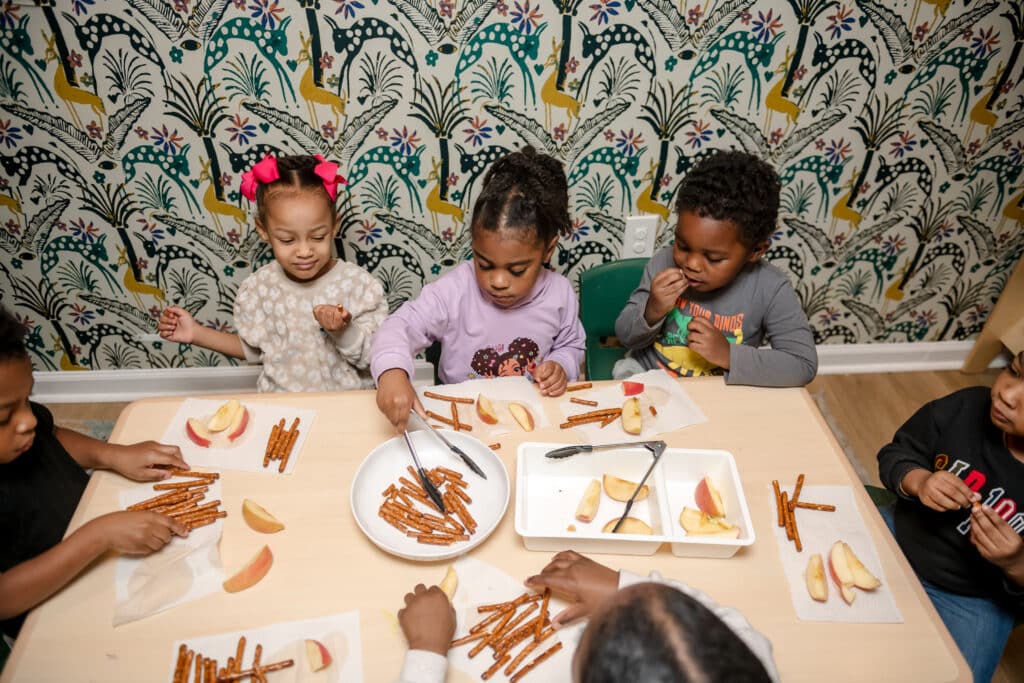
Five young children sit at a table, using tongs to pick up pretzels and apple slices from plates.

At a time when children and providers are going hungry and federal food aid is shrinking, food costs pose a significant risk to provider sustainability and the wellbeing of children that they serve. The new brief underscores how the current increases in CACFP reimbursement fail to grapple with the broader, structural challenges facing HBCC providers: rising food costs, inadequate reimbursement rates, burdened policy systems, and shifting eligibility criteria. All of which leave puts provider sustainability at risk and impacts child wellbeing.
Women’s contributions and experiences are not well represented in the record books, but it is just as rich and worth celebrating. Ours is a tale of community, resilience, and connection to one another, and it is inextricably linked with care work. 
During Women’s History Month, we celebrate the contributions that women have made to every corner of our society and honor their achievements. Among these leaders are the more than 5 million women who form the backbone of home-based child care (HBCC).
For generations, Black home-based child care providers have built systems of care rooted in community, trust, and resilience, often stepping in where formal systems fell short. Of the over 5 million home-based child care providers, including Family Child Care providers and paid and unpaid Family Friend and Neighbor caregivers, roughly a quarter in each subgroup identify as Black Non-Hispanic